

Collections You May Love


Filters
Sort Featured
-
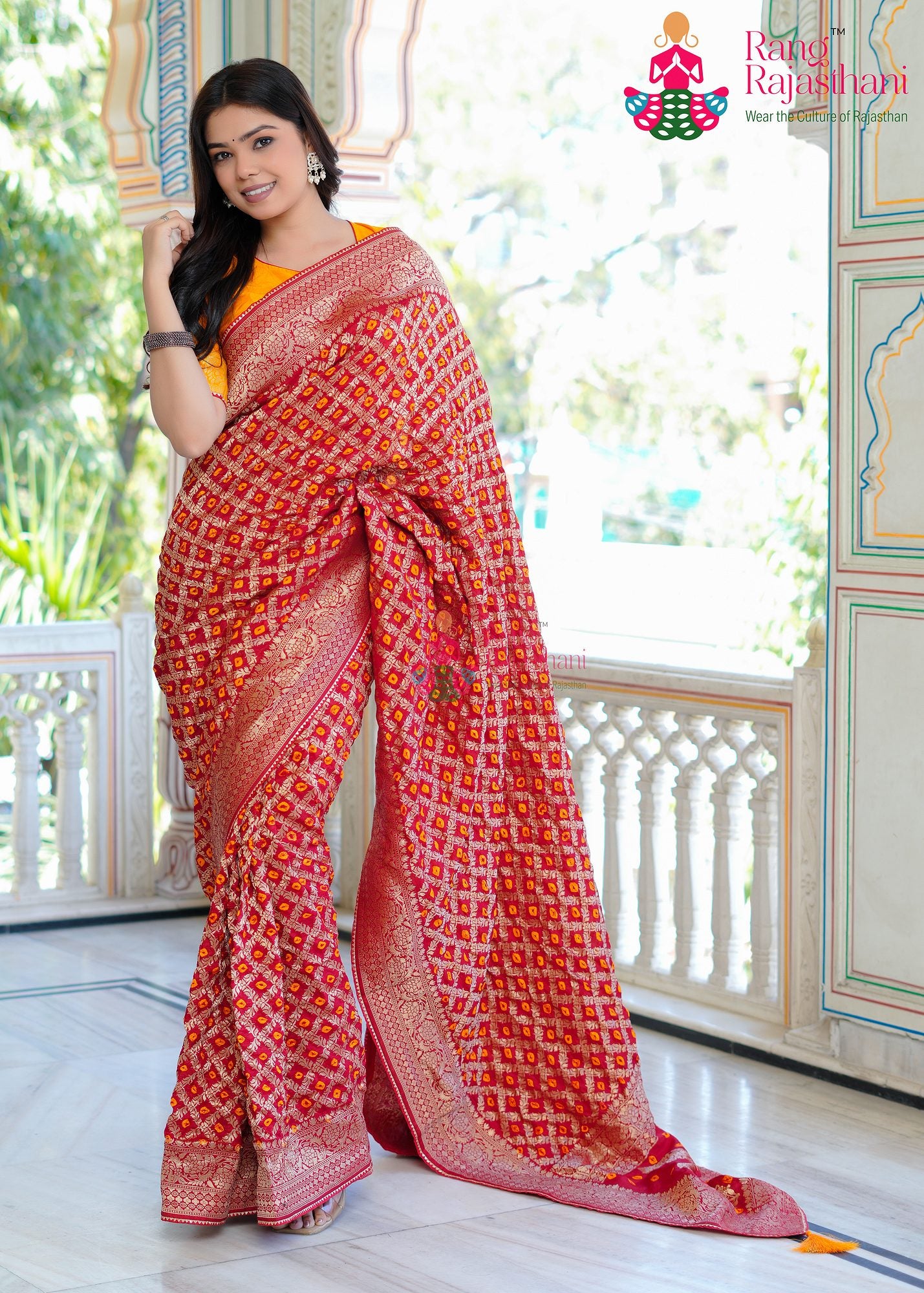
Rani Gajji Silk Banarasi Zari Weave Gharchola Saree for Mayra Ceremony | Bridal Wear -
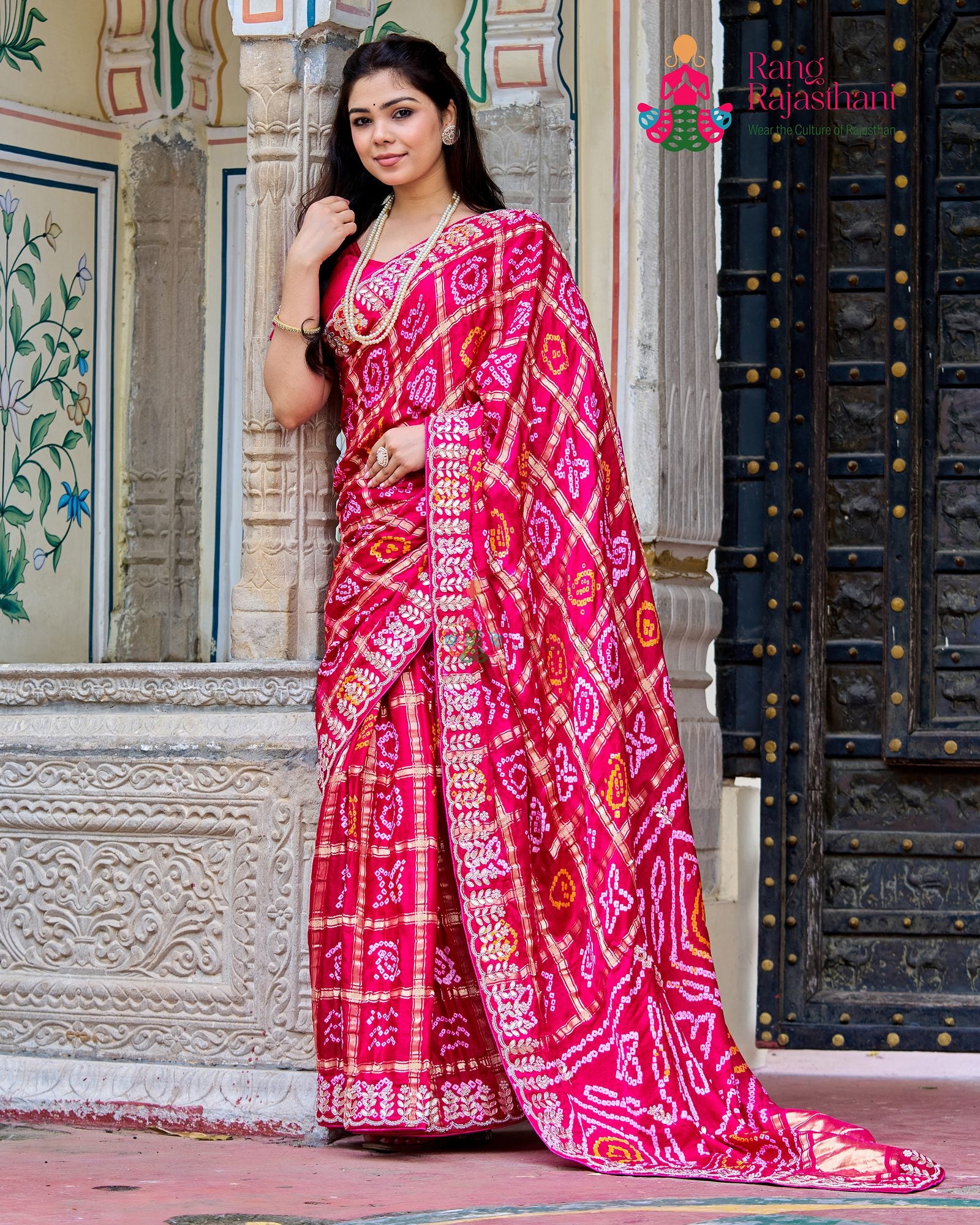
Red Pure Dola Silk Bandhani Gharchola Saree for Karwa Chauth | Top Pick -
Yellow Synthetic Banarasi Zari Weave Saree for Wedding Guest | Designer Pick -
Rani Soft Georgette Banarasi Zari Weave Leheriya Saree for Karwa Chauth | Wedding Wear -
Yellow Soft Georgette Banarasi Zari Weave Leheriya Saree for Haldi Ceremony | Festive Edit -
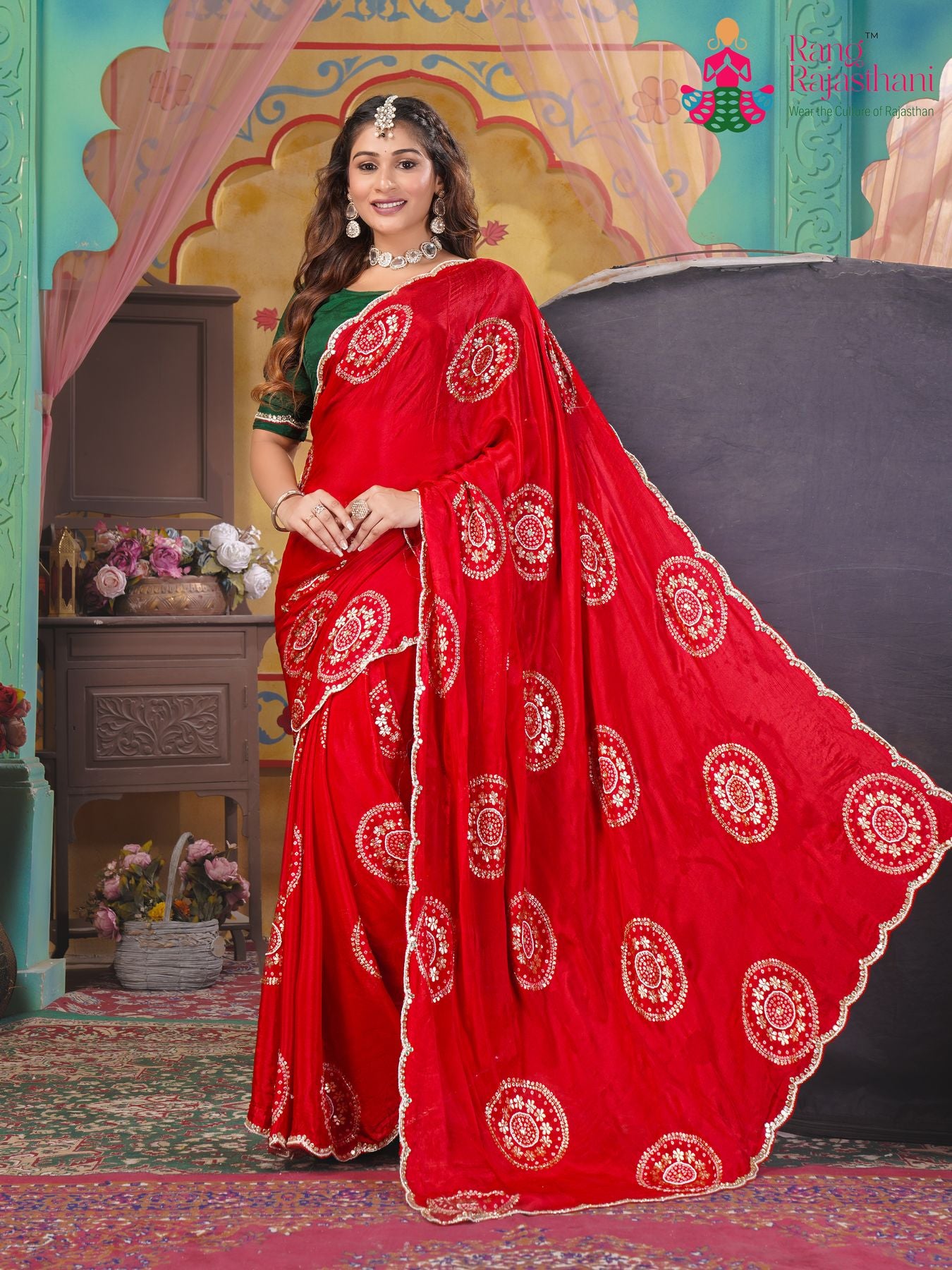
Red Chinnon Banarasi Zari Weave Saree for Wedding Guest | Latest Edit -
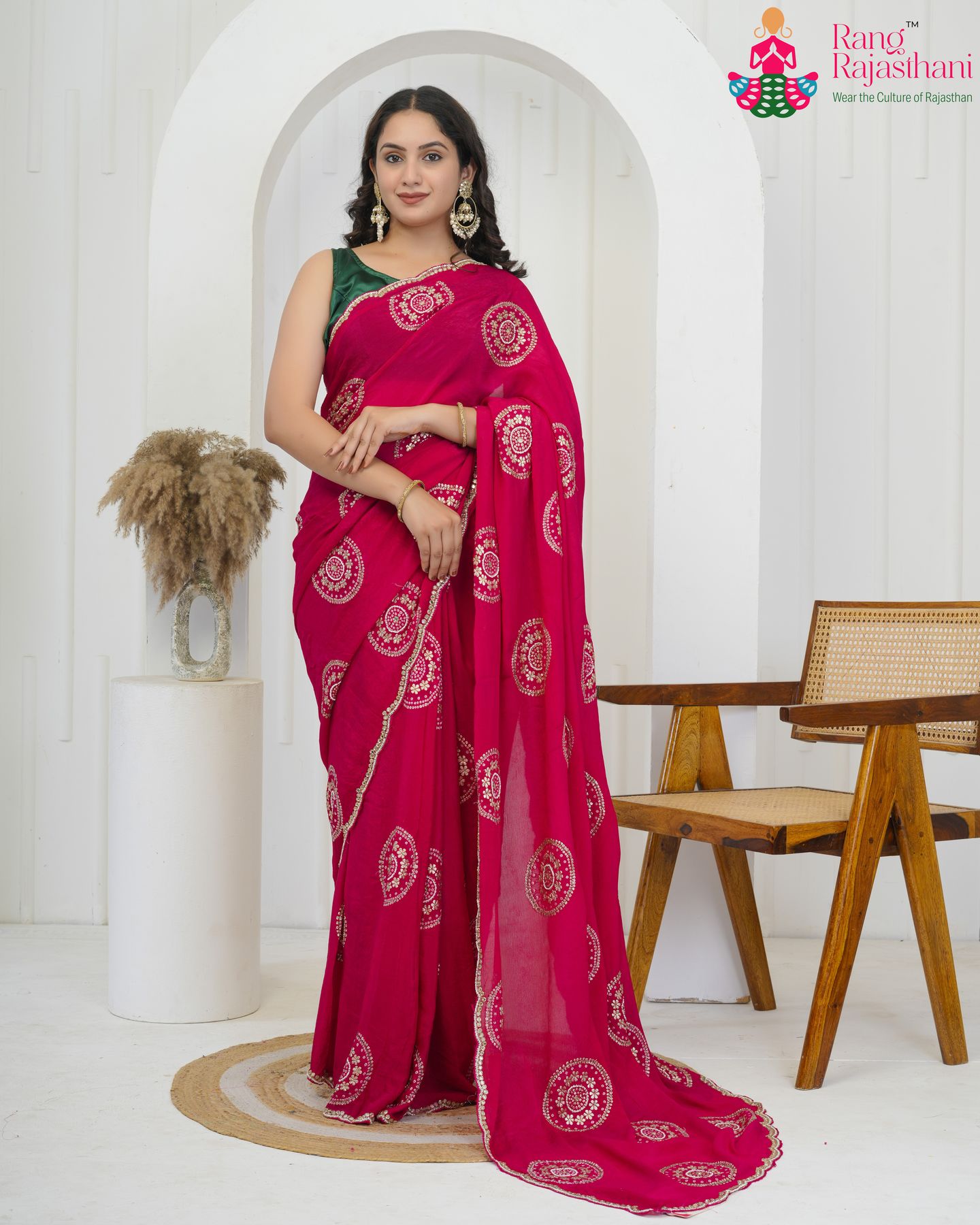
Rani Chinnon Banarasi Zari Weave Saree for Wedding Guest | Latest Pick -
Red Soft Georgette Bandhani Chunri Saree for Mayra Ceremony | Ethnic Edit -
Rani Soft Georgette Banarasi Zari Weave Chunri Saree for Wedding Reception | New Season -
Yellow Chinnon Banarasi Zari Weave Saree for Haldi Ceremony | New Arrival -
Rani Pure Dola Silk Bandhani Gharchola Saree for Festive Celebration | Top Choice -
Rani Soft Georgette Banarasi Zari Weave Saree for Festive Celebration | Season Edit -
Maroon Modal Banarasi Zari Weave Gharchola Saree for Bridal | Order Online -
Red Modal Banarasi Zari Weave Gharchola Saree for Bridal | Buy Now -
Blue Modal Banarasi Zari Weave Gharchola Saree for Bridal | Shop Latest -
Wine Modal Banarasi Zari Weave Gharchola Saree for Mehendi Ceremony | Designer Pick












About This Collection
Banarasi Zari Sarees — Rang Rajasthani
The word "Zari" comes from the Persian word zar — meaning gold. For over 500 years, weavers in Varanasi have been taking that word literally: drawing silver wire into hair-thin threads, wrapping them around silk, and weaving them into fabric that shimmers like liquid gold. This is the craft that defines Banarasi Zari.
The tradition began in earnest during the Mughal era, when Persian artisans settled in Varanasi and merged their weaving knowledge with Indian silk craftsmanship. What emerged was a textile so prized that it was woven for royal courts, gifted to temples, and passed down as family heirlooms. Today, Banarasi weaving holds a GI (Geographical Indication) tag — a government protection that ensures only fabric woven in and around Varanasi can carry this name.
At Rang Rajasthani, we bring this Varanasi heritage to Jaipur — curated for women who appreciate designs that never go out of style.
Two Types of Banarasi Zari Sarees in Our Collection
Not all Banarasi Zari sarees are the same — and understanding the difference helps you choose the right one for the right occasion.
-
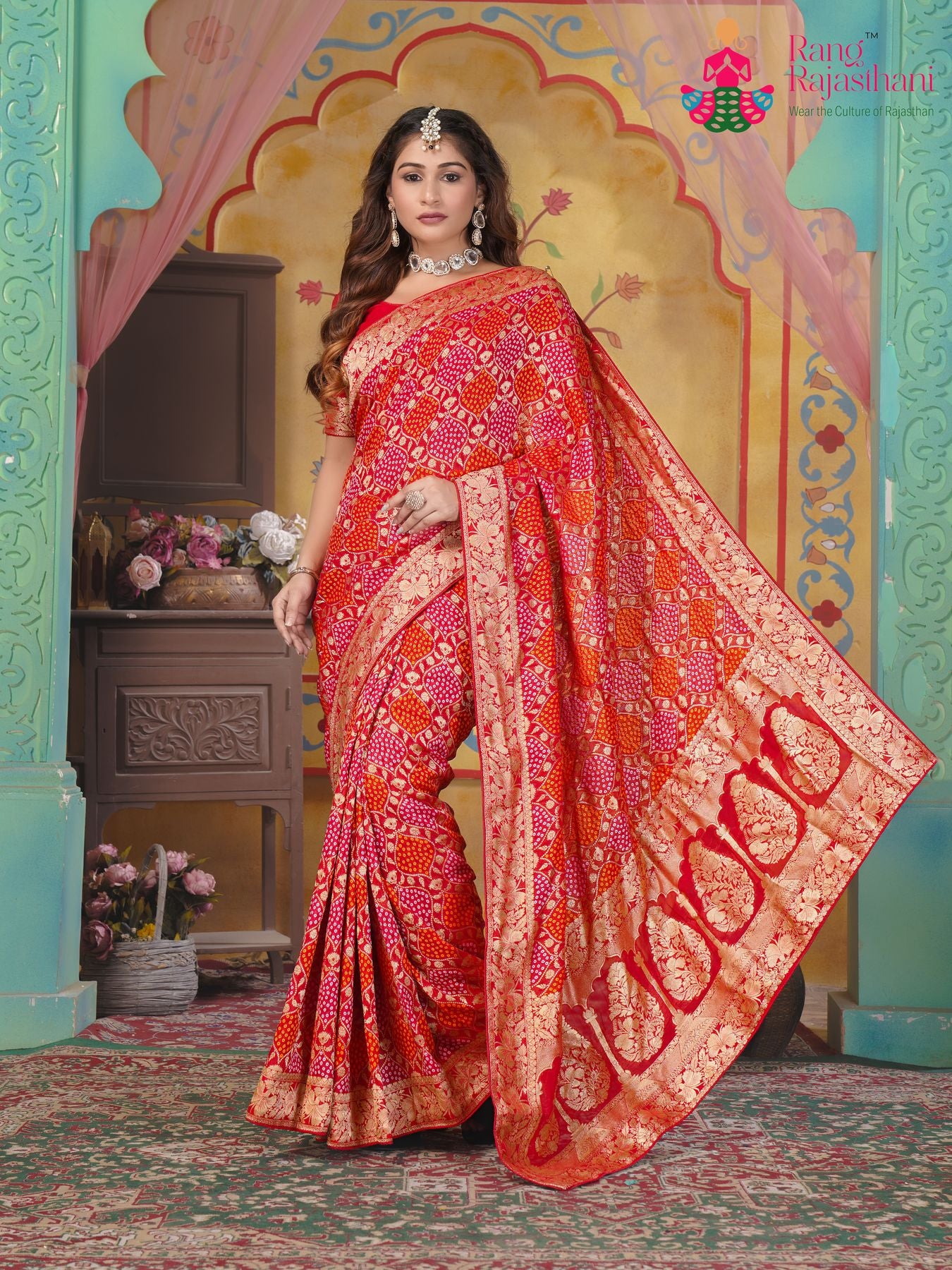
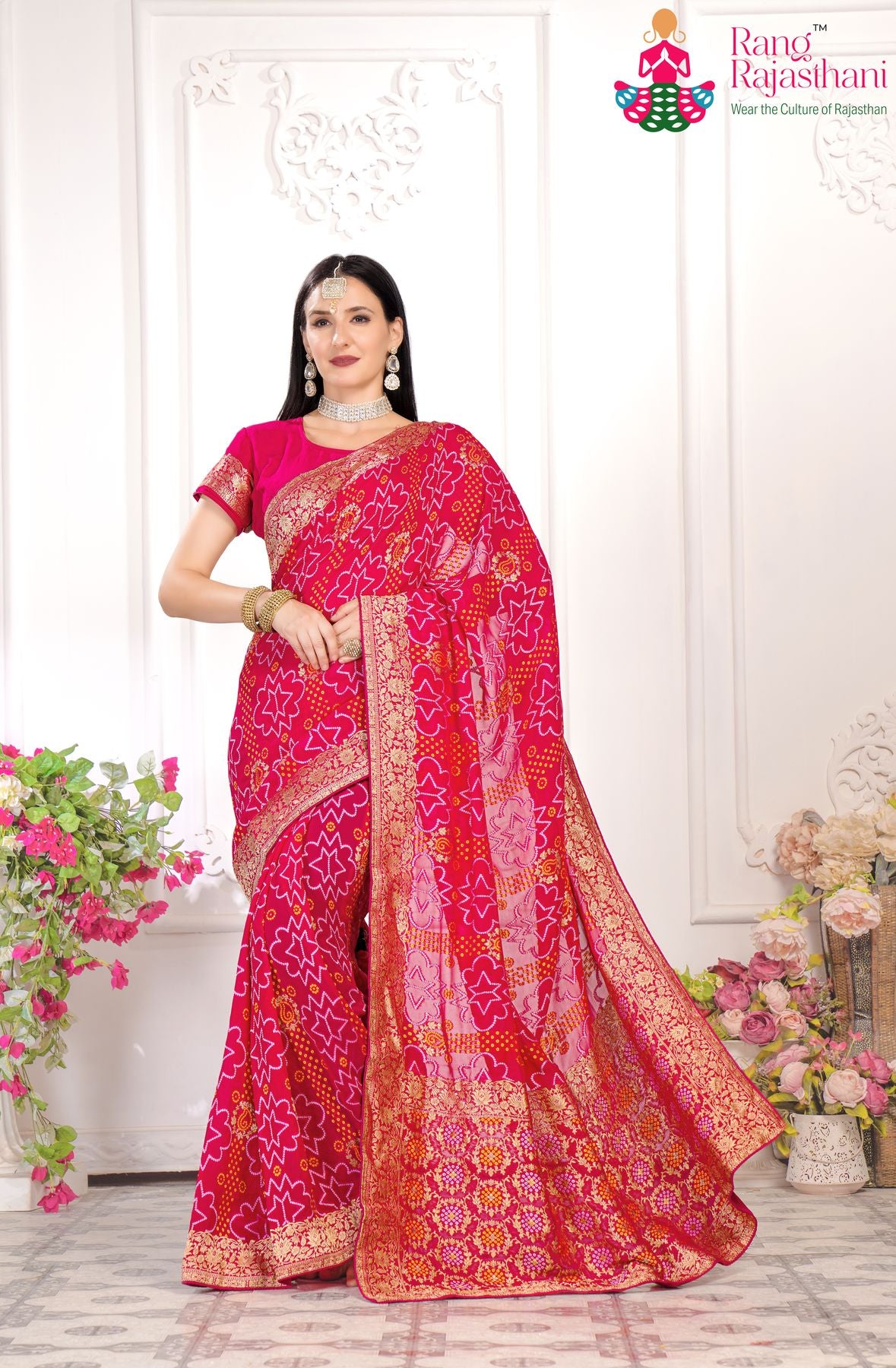
Type 1 — Full Banarasi Zari Weave: In these sarees, the zari pattern runs through both the body and the border of the saree. Rich floral and geometric motifs — inspired by Mughal design vocabulary like kalga (paisley), bel (vine scroll), and jaal (net patterns) — are woven into the fabric itself, thread by thread, on the loom. These are found primarily on Viscose Georgette and Pure Dola Silk in our collection. The result is a saree with presence — one that commands attention at ceremonial occasions.
-
Type 2 — Banarasi Zari Border with Decorated Body: Here, the richness is concentrated in the border — a deep, structured Banarasi Zari border — while the body carries either a clean plain finish or a refined hand-embellished surface. The hand work on the body includes delicate Bengali mirror work — tiny, precisely placed mirrors stitched individually — or a subtle light sequin work that adds quiet shimmer without any heaviness. This type is available on Pure Chinon — a whisper-thin silk fabric with an exceptionally smooth finish — and Pure HO Silk.
The Charakh Finishing — What Gives These Sarees Their Signature Look
Both types of Banarasi Zari sarees in our collection go through a traditional finishing process called charakh. Rice starch water is evenly sprayed across the fabric, which is then stretched taut and wound around a smooth wooden roller. The roller is set to dry in sunlight, and once completely dry, the saree is unwound and folded.
This process stretches the fabric evenly, removes any irregularities, and gives the saree its characteristic crisp, smooth finish and structured drape. It is this finishing — done by hand, not machine — that distinguishes a properly finished saree from one that is not.
Designs That Never Go Out of Style
Every saree in this collection carries designs that are rooted in centuries of weaving tradition — Mughal floral motifs, geometric jaals, structured borders. These are not trend-driven patterns. They do not become dated. A Banarasi Zari saree bought today will look equally relevant ten years from now — which is why they are chosen as heirlooms, not just outfits.
Occasions and Price Range
Our Banarasi Zari sarees suit Bridal Wear, Karwa Chauth, Raksha Bandhan, Mehendi, Wedding Reception, Sangeet Night, and general festive occasions. The collection is priced from ₹1,100 to ₹5,800 — making genuine Banarasi Zari accessible at every budget level.
Shop Banarasi Zari Sarees at Rang Rajasthani
Explore our full Banarasi Zari sarees collection — filter by fabric, work, colour, or occasion to find the saree that carries the right weight of tradition for your moment.