

Collections You May Love


Filters
Sort Featured
-
Rani Gajji Silk Banarasi Zari Weave Gharchola Saree for Mayra Ceremony | Bridal Wear -
Orange Gajji Silk Hand Embellishment Gharchola Saree for Mayra Ceremony | Ethnic Edit -
Red Gajji Silk Hand Embellishment Gharchola Saree for Mayra Ceremony | Ethnic Wear -
Purple Gajji Silk Gota Patti Gharchola Saree for Wedding Guest | Festive Pick -
Blue Gajji Silk Bandhani Chunri Saree for Mayra Ceremony | Luxury Edit -
Red Gajji Silk Gota Patti Gharchola Saree for Mayra Ceremony | Indian Edit -
Red Gajji Silk Bandhani Chunri Saree for Bridal | Luxe Drape -
Rani Gajji Silk Banarasi Zari Weave Gharchola Saree for Mayra Ceremony | Bridal Collection -
Red Gajji Silk Bandhani Faag Saree for Bridal | Designer Collection -
Red Gajji Silk Bandhani Chunri Saree for Bridal | Designer Edit -
Red Gajji Silk Bandhani Gharchola Saree for Bridal | Traditional Edit -
Green Gajji Silk Gota Patti Gharchola Saree for Mehendi Ceremony | Festive Wear -
Rani Gajji Silk Gota Patti Gharchola Saree for Mehendi Ceremony | Wedding Edit -
Red Gajji Silk Gota Patti Gharchola Saree for Bridal | Classic Pick -
Cream Gajji Silk Gota Patti Saree for Mayra Ceremony | Latest Pick -
Maroon Gajji Silk Gota Patti Gharchola Saree for Mayra Ceremony | Order Online -
Rani Gajji Silk Gota Patti Gharchola Saree for Bridal | Classic Edit -
Red Gajji Silk Bandhani Gharchola Saree for Bridal | Latest Edit -
Green Gajji Silk Banarasi Zari Weave Saree for Wedding Guest | Indian Wear -
Red Gajji Silk Gota Patti Gharchola Saree for Mayra Ceremony | Exclusive Pick -
Red Gajji Silk Gota Patti Gharchola Saree for Mayra Ceremony | Festive Collection
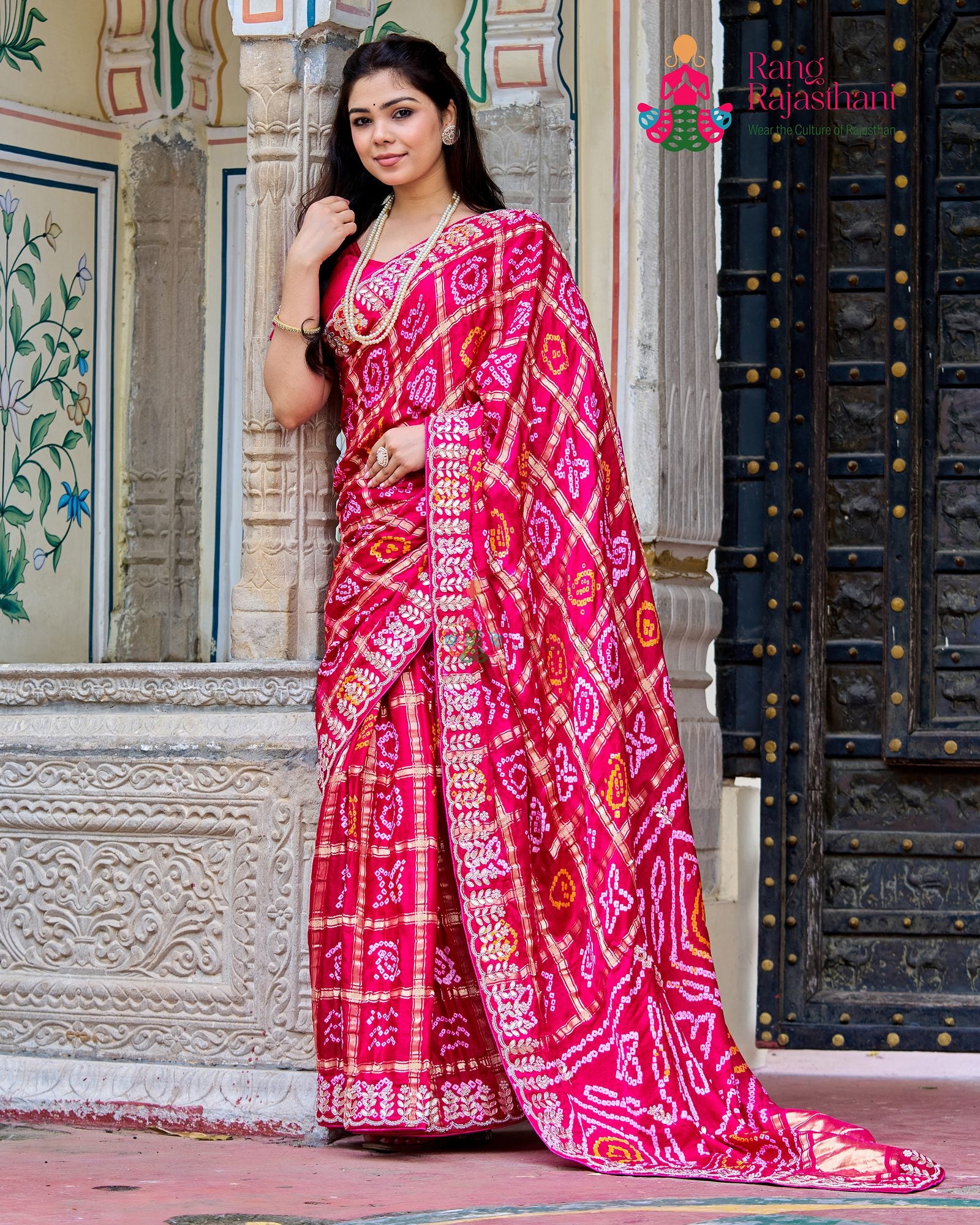


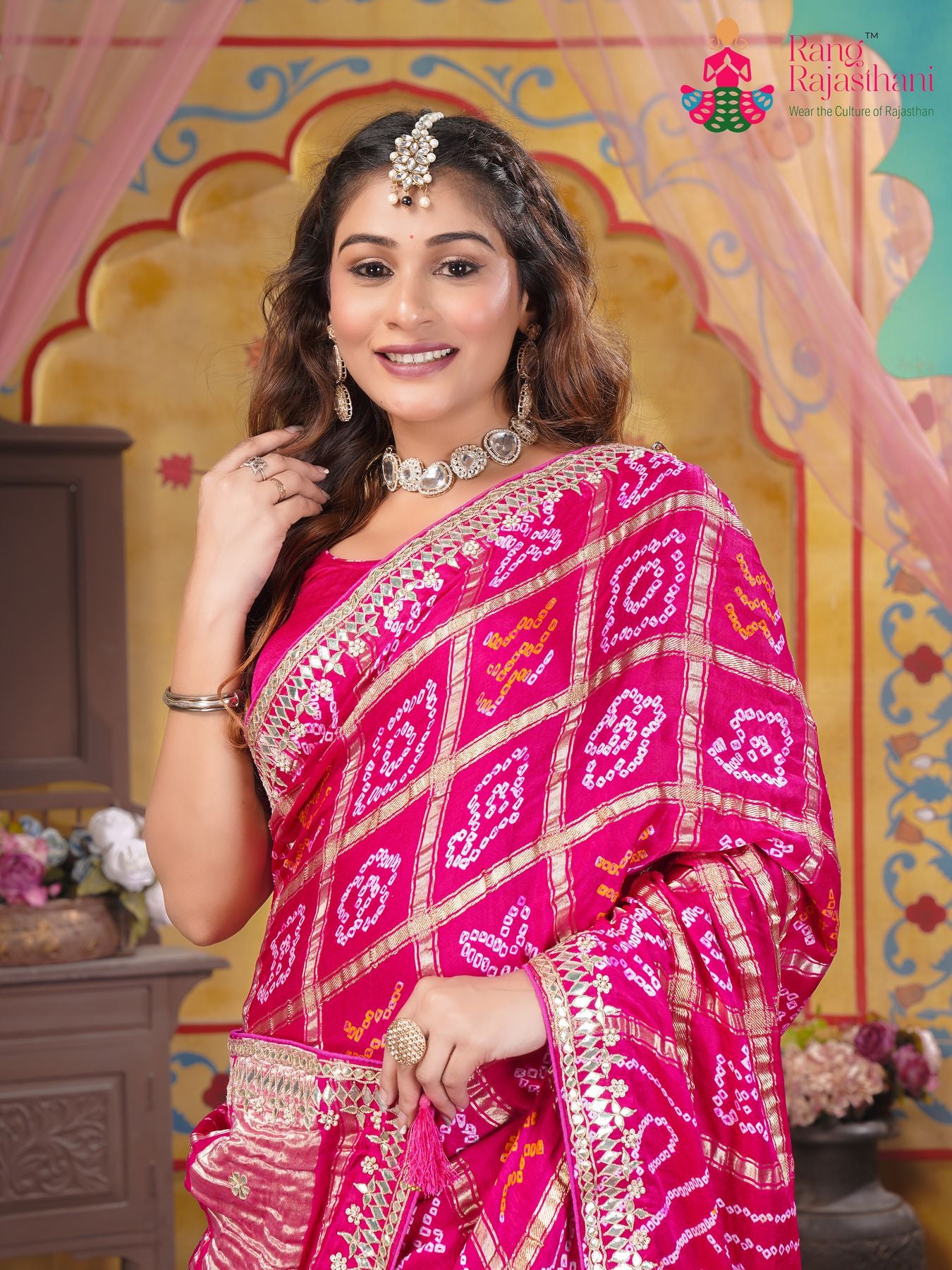


About This Collection
Pure Gajji Silk Sarees — The Fabric of Ceremonial Silk
Some sarees you wear. A Pure Gajji Silk saree you arrive in. This Gujarat-origin satin-weave silk has been the chosen fabric of Rajasthani and Gujarati weddings, Mayra ceremonies, and family heirlooms for generations — and for good reason. It carries weight without feeling burdensome, holds color like nothing else in the silk family, and pairs beautifully with every traditional craft layered onto it. At Rang Rajasthani, our Pure Gajji Silk collection is built around the most ceremonial moments in your wardrobe, with pieces sourced from the weaving hubs of Jamnagar and surrounding Gujarat regions.
What Makes Gajji Silk Different From Other Silks
Gajji Silk is a satin weave silk — and that single technical detail explains its character. The satin weave creates a high-shine glossy front surface paired with a matte, slightly grippy reverse. That structural difference is what gives Gajji its instantly recognizable look: a deep, liquid luster on the surface that catches light beautifully, and a substantial fall that holds pleats, drapes confidently, and frames the body with quiet authority. Unlike Dola Silk's lightweight festive shine or Modal Silk's soft fluid drape, Gajji is the silk for moments that ask for presence.
Why It's the Preferred Base for Premium Craft Work
Walk through our Gajji Silk collection and you'll notice almost every piece carries layered handwork — and that's no accident. The fabric's substantial drape and smooth surface hold ceremonial craft beautifully: Bandhani tie-dye dots show up sharper on Gajji than any other silk, Gharchola zari grids weave into Gajji with rich structural integrity, Gota Patti hand work sits flat and confident on Gajji's matte reverse, and Banarasi Zari weaves deepen against Gajji's high-shine surface. Hand Embellishment work — the dressiest, most premium statement pieces in our store — almost always uses Gajji as its base. This is the silk that elevates craft.
Occasions Pure Gajji Silk Sarees Are Made For
Gajji Silk is ceremonial silk. Our collection is built for the heaviest occasions in your wardrobe: Mayra ceremonies, Bridal Wear, Wedding Guest dressing for close family weddings, Mehendi ceremonies (in lighter color stories), and the once-a-year major festive functions where you want a saree that photographs as richly as the moment deserves. The price range — ₹5,600 to ₹19,300+ in our edit — reflects this. These aren't second sarees. They're the centerpiece pieces, often passed down or remembered for years after the event.